

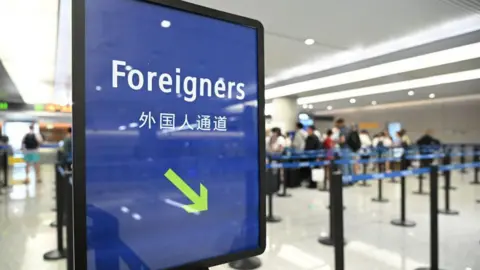
Originally revealed in the eighth month, the novel visa scheme focusing on international technology professionals received little public attention.
However the new entry permit, which was implemented this mid-week, unexpectedly attracted significant focus after described as the US H-1B program by foreign media.
The analogy triggered widespread concern among local residents, with many doubting whether privileges given to overseas workers would heighten competition in an currently struggling job market.
"We have so many college holders, including even more with postgraduate and PhD qualifications. There's already a oversupply of homegrown professionals - and now you're bringing in international university graduates?"
"We've seen countless new schemes pushing our college students to vie with one another, but finally, nothing beats a overseas citizenship," another social media participant wrote.

Additional users voiced questions about whether officials could attract quality talent and whether international professionals would adjust to living conditions in the country, citing communication barriers and China's closely monitored regulatory framework.
This criticism proved so vehement that government-affiliated media outlets have intervened to attempt to soothe the situation.
In recent days, multiple official publications issued articles supporting the scheme as an chance "for the world to witness a increasingly accessible and optimistic nation in its new era."
Understanding the recent visa initiative?
Even though detailed specifications are still unclear, the officials has stated that the scheme is for experts working in science, technology, engineering and mathematics fields.
The government have described it as a visa for "exchanges involving education, scientific inquiry and technology, culture, as well as entrepreneurship and commercial activities."
Per official documentation, candidates for the K visa should be those "who have graduated from well-known colleges or academic organizations in China or overseas with a college or more advanced credential in a science, technology, engineering or mathematics discipline."
Importantly, international specialists will not need support from a domestic company to be approved for the permit - and will enjoy greater freedom in terms of the multiple entries, validity period and length of visit.
Government-affiliated publications, while trying to address citizen anxiety, have declined explaining the exact extent of operations the program encompasses, not addressing the key inquiry that is certainly on the thoughts of many - will it allow qualified overseas experts to work in China?
Via latest articles, government-affiliated publications have clarified that the K visa would differs from the equivalent to an US work visa, indicating that it was "not merely a job visa."
This program constitutes just the most recent move in the country's wider campaign to lure international visitors to the nation - whether for visits, academic work or economic endeavors.
The country's ambitions and challenges
Evidently is that the country is capturing the chance as the US retreats from its reputation as a top location for global experts and travelers.
The public launch of the entry scheme - though the timing was set eight weeks ago - corresponds to recent changes to American immigration regulations, a decision that has generated debate in locations that are significant contributors of skilled workers to the US.
As of mid-year, the country had visa-free treaties with seventy-five countries to make traveling to the nation more convenient for international travelers.
"During a period when some countries are adopting protectionist policies and limiting foreign professionals, China has shrewdly taken this crucial moment and promptly launched related measures," an official commentary states.
Nevertheless the scheme is faces its challenges, experts observe.
The internet backlash demonstrates a pattern of general scrutiny and objection in the country over what is perceived as advantageous treatment for international individuals, based on industry observers.
Linguistic represents a further obstacle. Many researchers and professors who have transferred to the country in recent years are ethnic Chinese and {fluent|proficient|


